
4 min read
3 Reasons to Use Digital Badges in UX
More and more, companies are seeking creative ways to get customers engaged with their proposition, and critically, keep them coming back for more. In the world of UX, there is…
Behavioural economics — which extends the ability of economics to explain the world — has become very fashionable.
Richard Thaler, Nobel Prize winner for his work in this area, observed that most of the time, the rational choice model of standard economics works well. People gather information on the various alternatives open to them, and choose the one which fits their preferences most closely.
Behavioural economics comes into play when people are observed to deviate from the predictions of this model. To explain this, Thaler points out that economists borrow bits from psychology and add them on to their basic rational choice theory. He has shown how various psychological concepts, such the so-called “endowment effect” and the “sunk cost fallacy”, can be used to explain why people make irrational choices.
Yet one important piece of psychology which economists have not used so far is the concept of cognitive dissonance.
The US psychologist Leon Festinger encountered a classic example when he infiltrated a group which believed that a catastrophic flood would end the world on 21 December 1954. The appointed day came and went, and the world was still there. Rather than processing this information rationally and abandoning their discredited beliefs, group members adhered to them even more strongly. The fervour of their proselytising increased.
Another important instance is seen in the Ukrainian famine of the early 1930s. On Stalin’s instructions, the Soviet military and armed members of the Communist Party seized the grain in the Ukraine. Millions died as a result.
The ardent young Communists turned on the Ukrainians and accused them of terrorism. The peasants were, despite all the evidence to the contrary, deliberately starving themselves to death in order to discredit socialism. Any Party member who disagreed was shot.
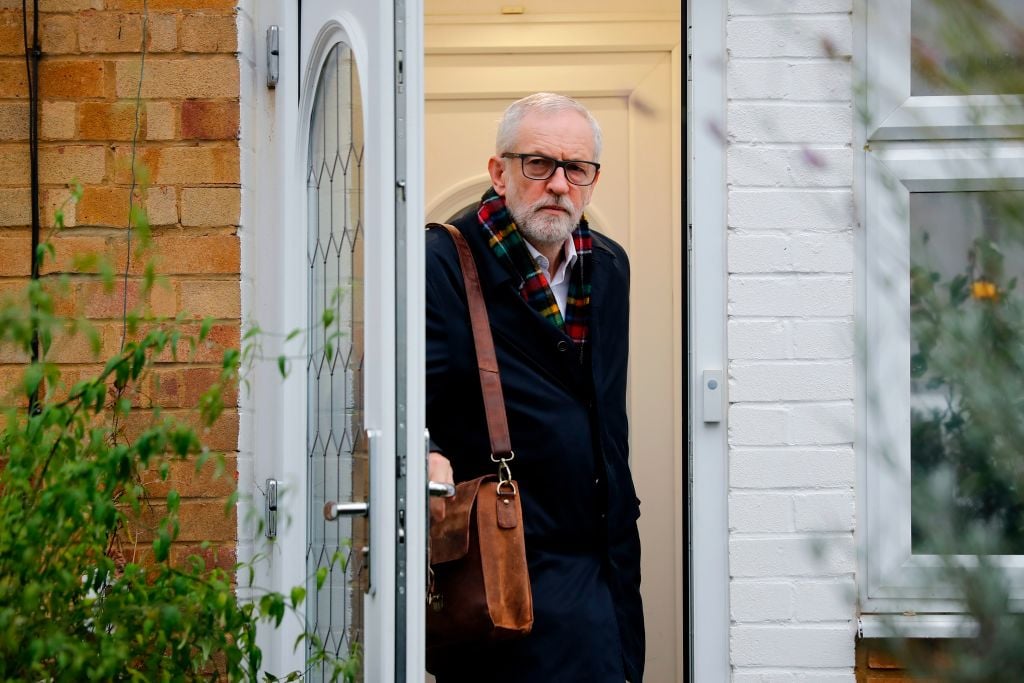
A much less harrowing example is given by Jeremy Corbyn and his cult during the General Election here.
The Friday before polling day, I was in my home town of Rochdale, having a drink with a couple of long-standing friends, both very experienced local Labour members. They were certain that Labour would lose. Brexit was certainly being mentioned on the doorsteps as a reason why voters weren’t supporting Labour, but the main reason was Corbyn.
My friends made specific predictions on the basis of rational analysis of the evidence. The neighbouring seat of Heywood and Middleton (majority 8,000 in 2017) would be lost. It was. Elsewhere in Greater Manchester, the Tories would win Leigh, Labour since 1922. They did.
Information of this kind, gathered on the ground by experienced agents, was fed back to the Labour leadership throughout the campaign from all over the country. It was pointedly ignored, possibly on the grounds that the informants were right-wingers trying to discredit the Dear Leader.
The electorate took some time to discover the reality of Corbyn.”
The electorate took some time to discover the reality of Corbyn. But once they had done so, far from displaying cognitive dissonance, they made a rational choice.
Now Labour, if it is ever to recover from defeat, should learn the same lesson.
Article by: Paul Ormerod, Board Member and Chief Economist at Cowry Consulting.
This article first appeared on https://www.cityam.com/a-lesson-in-cognitive-dissonance-for-the-corbynites/
Image Credit: Getty Images
More and more, companies are seeking creative ways to get customers engaged with their proposition, and critically, keep them coming back for more. In the world of UX, there is…
50% of our cortex is dedicated to visual processing So although how we talk about products and services to customers is important, how we take in information is equally important. As…
Bigger, Better and Bolder. But what does ‘bolder’ really mean for the Cowry Global Summer School 2021? Earlier this year, we pledged to increase diversity and inclusion in the summer…