4 min read
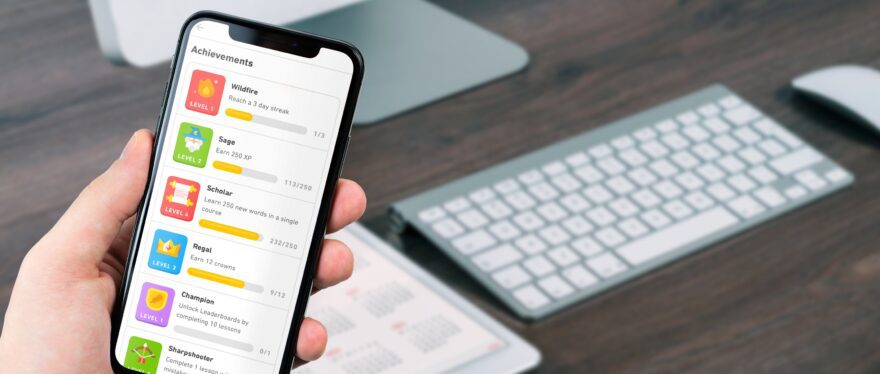
3 Reasons to Use Digital Badges in UX
More and more, companies are seeking creative ways to get customers engaged with their proposition, and critically, keep them coming back for more. In the world of UX, there is…

Construction environments present constant safety risks. High-pressure working conditions, complex tasks and fast-paced environments can lead to unsafe behaviours becoming normalised over time.
Overbury, responsible for the refurbishment of the Shell Centre on London’s Southbank, wanted to explore new ways to improve safety performance on site.
Rather than relying solely on traditional safety training and enforcement, Overbury partnered with Cowry to apply behavioural science to the problem. The challenge was:
How can behavioural interventions reduce unsafe behaviour on busy construction sites and improve safety culture among operatives?
Unsafe behaviour on construction sites is rarely driven by knowledge gaps but by emotional states, environmental cues and social dynamics.
Cowry conducted a behavioural analysis of the construction site to understand the environmental and psychological factors influencing safety behaviours.
Behavioural audit – We observed the working environment, routines and decision-making contexts affecting operatives’ behaviour on site.
Behavioural diagnosis – The audit identified emotional states, social dynamics and habitual behaviours that were contributing to unsafe actions.
Behavioural intervention design – Based on these insights, we designed three interventions aimed at influencing behaviour through environmental cues, incentives and social reinforcement.
Our research revealed several behavioural dynamics influencing safety behaviour on site.
What we observed
Construction sites are fast-paced and stressful environments.
Why it happens
High cortisol and testosterone levels can increase impulsive behaviour and reduce risk awareness.
What it means
Creating environments that reduce stress and encourage calm emotional states can improve safety behaviours.
What we observed
Safety compliance improves when individuals feel accountable for their actions.
Why it happens
People are strongly motivated by rewards and are particularly sensitive to potential losses.
What it means
Incentive structures that leverage loss aversion can reinforce safe behaviours.
What we observed
People are more likely to behave consistently with commitments they have made publicly.
Why it happens
Individuals prefer actions that align with their self-image and group identity.
What it means
Visible commitments to safety can strengthen long-term behavioural change.
Cowry designed three behavioural interventions to reinforce safe behaviour on site.
The behavioural interventions delivered significant improvements in safety performance. The success of the programme led Overbury to incorporate behavioural safety principles into their wider site standards, including the adoption of pink safety walls across future projects.
The project also received industry recognition, winning the Health, Safety & Wellbeing Initiative of the Year at the Association for Project Safety’s National CDM Awards.
reduction in unsafe behaviours
“We believe in partnering with experts and Cowry has a proven methodology using cognitive and behavioural psychology that really works. Through our pilots we have already seen significant benefits across the business in how we support customers and make it easier for them to engage and make good decisions about their financial futures.”
Michael Reed-Smith
Retail Director, Standard Life
“The lessons we have learned here can be applied to any project size and don’t require a large financial investment to see a significant change.”
Sarah Piddington
Head of Health, Safety & Wellbeing, Overbury
Traditional safety programmes often rely on rules and enforcement. This project instead focused on changing the behavioural environment by influencing emotional states, incentives and social norms. By redesigning the context in which decisions were made, the interventions made safe behaviour easier and more natural for operatives.
More and more, companies are seeking creative ways to get customers engaged with their proposition, and critically, keep them coming back for more. In the world of UX, there is…
50% of our cortex is dedicated to visual processing So although how we talk about products and services to customers is important, how we take in information is equally important. As…
Bigger, Better and Bolder. But what does ‘bolder’ really mean for the Cowry Global Summer School 2021? Earlier this year, we pledged to increase diversity and inclusion in the summer…