4 min read
3 Reasons to Use Digital Badges in UX
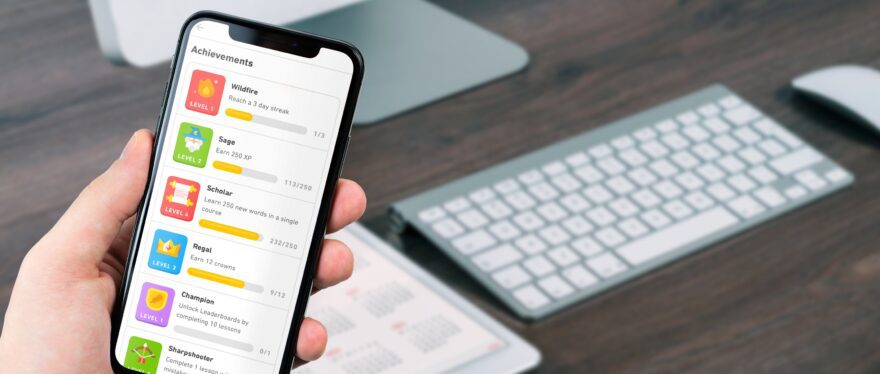
More and more, companies are seeking creative ways to get customers engaged with their proposition, and critically, keep them coming back for more. In the world of UX, there is…


Mitchells & Butlers operates some of the UK’s most recognisable restaurant brands, including:
Menus play a critical role in influencing what customers notice, how they evaluate options and ultimately what they order.
However, poorly designed menus can create cognitive overload, making it harder for diners to process information and decide what to order. This slows down decision making and can reduce both customer satisfaction and restaurant profitability.
Mitchells & Butlers partnered with Cowry to redesign their menus using behavioural science to improve both customer experience and commercial performance.
Customers don’t read menus line by line. They scan them rapidly, relying on visual cues and mental shortcuts. Poorly structured menus create cognitive overload, slowing decision making and reducing the likelihood of ordering multiple courses.
Cowry delivered a comprehensive behavioural design programme combining research, experimentation and real-world testing.
The programme included:
The behavioural audit and eye-tracking analysis revealed several key friction points.
These included:
The mains section of the menu was significantly larger than the other sections.
Behavioural science shows that larger elements are perceived as more important. As a result, customers focused heavily on mains and were less likely to explore starters or desserts.
Dishes were not organised into clear logical groupings. Diners had to scan large sections of text to find options they might like.
This created cognitive overload, slowing decision making and reducing confidence in choices.
Images positioned around the edges of the menu were pulling attention away from the dishes.
Because images capture attention faster than text, diners’ eyes were repeatedly drawn to the edges of the page rather than following a natural reading flow.
Eye-tracking revealed that customers were making too many fixation points when scanning the menu.
When fixation points are too numerous or too large, customers either fail to absorb the information or become stuck analysing options.
Cowry redesigned the menu using behavioural design principles to guide attention and simplify decision making.
The menu was redesigned into three equal sections:
Giving each section equal visual weight signalled that all courses were equally important, encouraging diners to explore the full menu.
Dishes were organised into intuitive categories such as:
This reduced cognitive load and made the menu easier to navigate.
Images were repositioned from the edges of the menu to the centre of key sections, anchoring the start of each category and guiding diners through the menu.
Cocktails were redesigned to show the glassware used for each drink, allowing customers to visualise the drink and reducing uncertainty when ordering.
The redesigned menus were tested using infrared eye-tracking experiments. The new design created a clear spiral scanning pattern, with diners naturally moving through the menu:
The redesign also reduced the number of fixation points, helping diners process information more efficiently.
Following the eye-tracking validation, the menus were tested in live restaurant environments.
The results were statistically significant:
in spend per head
in gross profit per head
David Gallacher
Divisional Director, Mitchells & Butlers plc
Menus are powerful behavioural environments.
By redesigning the menu around how diners actually scan information and make decisions, Cowry helped Mitchells & Butlers transform their menus into behaviourally optimised choice environments.
The new design reduced cognitive overload, guided customer attention and created a clearer decision journey, ultimately increasing both spend per head and overall restaurant profitability.
More and more, companies are seeking creative ways to get customers engaged with their proposition, and critically, keep them coming back for more. In the world of UX, there is…
50% of our cortex is dedicated to visual processing So although how we talk about products and services to customers is important, how we take in information is equally important. As…
Bigger, Better and Bolder. But what does ‘bolder’ really mean for the Cowry Global Summer School 2021? Earlier this year, we pledged to increase diversity and inclusion in the summer…